
Map the areas and the times first
A fair yard duty roster starts with an honest list of what needs covering. Walk the school at recess and lunch with whoever writes the roster and note each area and how many adults it needs. Your school’s duty of care policy and supervision ratios set the minimum; this list is how you meet it.
| Duty | Typical time | Staff |
|---|---|---|
| Before school, front gate | 8:30–8:50 | 1–2 |
| Recess, oval | 11:00–11:30 | 2 |
| Recess, junior playground | 11:00–11:30 | 1–2 |
| Lunch eating time, classrooms | 1:30–1:40 | Class teachers |
| Lunch play, oval and playground | 1:40–2:20 | 2–4 |
| After school, bus line | 3:15–3:35 | 1–2 |
Split long duties. A 40-minute lunch duty can become two 20-minute halves, which lets a teacher eat lunch and still take a turn. Two short duties are usually easier to accept than one long one.
Give each area a name everyone recognises, like “Oval” or “Top playground”, and a short note on the staffroom board about what that duty involves: which gate, where the first aid bag is, which toilets to check.
What fair looks like in a staffroom
Fairness in yard duty is less about identical numbers and more about everyone seeing how the duties have been shared and why. A few principles most schools settle on:
- Count duties per area, not just in total. Ten duties all on the windy oval is not the same as ten in the library.
- Spread the days. Nobody should get every Monday or every Friday afternoon. Rotate the day of the week, not only the area.
- Weigh long and short duties. If a before-school duty is 20 minutes and a lunch duty is 40, count minutes, or keep them as separate lists so each is shared out on its own.
- Publish it. A roster pinned up, or shared on a link, ends most arguments before they start.
Part-timers, leadership and specialists
This is where most yard duty rosters go wrong, usually by accident.
Part-time staff
Agree a rule and write it down. The common approach is duty in proportion to the days worked: a teacher on three days a week does roughly three-fifths of a full-timer’s duties, only on their working days. Check what your enterprise agreement or school policy says, because some set this out.
Make sure part-timers aren’t always given the leftover slots. If someone only works Monday to Wednesday, rotate them through the Monday, Tuesday and Wednesday areas like everyone else.
Leadership
Principals, deputies and coordinators often take fewer duties, or take a standing duty such as the front gate. Either is fine if it is decided openly and shown on the roster. What causes friction is leadership quietly missing from the list.
Specialists and support staff
Specialist teachers on several campuses, and education support staff, may have different rules. Decide whether they are on the roster, on which days, and in which areas, and say so.
If someone has a medical reason to avoid a particular area or time, handle it privately with them and simply leave them out of those slots. Nobody else needs to know why.
Wet weather and hot days
Rather than a second roster for wet days, map each outdoor area to an indoor one: the teacher on the oval covers the hall, the playground teacher takes the library, the gate duty stays the same. Then the normal roster still works when it rains, and nobody has to check two lists.
For very hot days, decide in advance which areas close and where those staff go. Write the wet and hot weather rules at the top of the roster so they’re there when needed.
Changes mid-term
Staff go on leave, a new graduate starts in week 4, someone takes on a coordinator role. Plan for change:
- Roster one term at a time, not the whole year.
- Ask staff before the term which days they’re away: camps, excursions, PD, planned leave.
- When someone leaves or joins, reshuffle the remaining weeks rather than handing all their duties to one person.
- Have a clear rule for swaps, such as: arrange it, then tell the daily organiser.
- Keep a short list of who covers when a teacher is absent on the day.
A yard duty roster in FairTurns
FairTurns is a free roster app that suits yard duty. Make a team for each area (Oval, Playground, Front gate), click a Monday, set the bell times, and choose Every week on Monday. Repeat for each day, and the dates are kept up to 12 months ahead. Give each a headcount: “Oval, 2 people” makes two places on every duty.
Add staff by email or by name only, then press Fill for the term: each empty place goes to whoever has had the fewest turns in that area, and nobody is put in two places at once across all the areas. Turns booked shows how many duties each person has. A part-timer who doesn’t work Fridays can be marked Away regularly on Fridays, and Fill leaves them off; camps and leave go in as Away for a stretch.
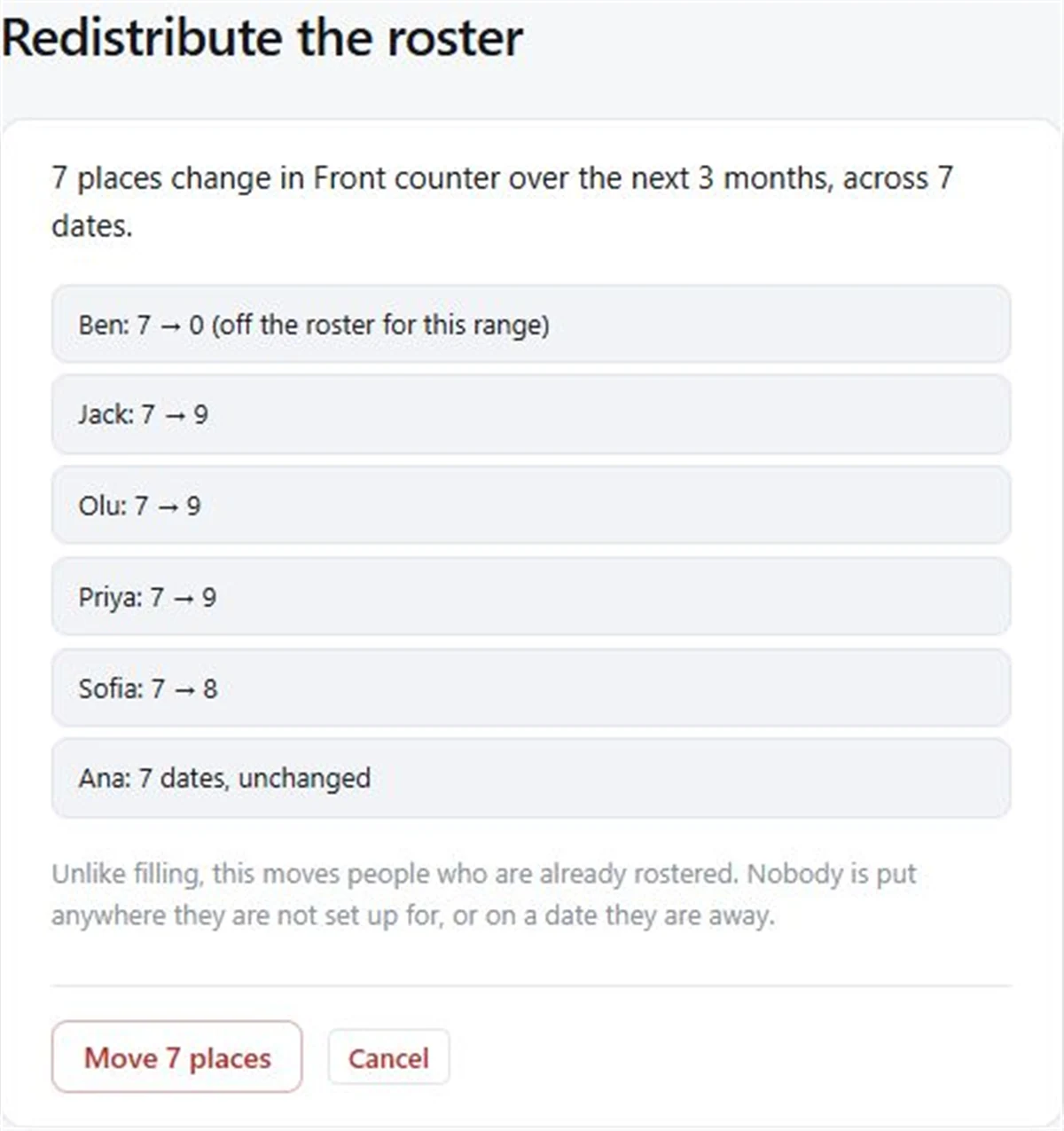
When staff change mid-term, Redistribute takes out anyone who has left, shares their duties out again, and lists every teacher who gains or loses a duty before anything changes. Share the roster on one link for the staffroom screen and phones. More on the yard duty roster page, or print the yard duty roster template.
Questions
How many yard duties should a teacher do?
It depends on your number of staff, your areas and your enterprise agreement. Divide the duties per week by the full-time-equivalent staff on the roster, then check the result against any limits your agreement sets.
Should leadership do yard duty?
Many schools have leadership take fewer duties or a standing one, like the front gate. Whatever you decide, put it on the roster so everyone can see it.
How do you roster yard duty for part-time staff?
Roster them only on the days they work, in proportion to their days, and rotate them through the areas on those days so they don’t always get the leftover slots.
Do we need a separate wet weather roster?
Usually not. Map each outdoor area to an indoor one so the same people cover the matching indoor space when it rains.